
Hold onto your Ghosts, Guardians, because the world of Destiny 2 has just been rocked by a lawsuit that's more explosive than a Gjallarhorn shot. In a stunning turn of events that's got the entire gaming community saying, "No way!" Bungie, the legendary studio behind the decade-defining live-service juggernaut, finds itself in the crosshairs of a copyright infringement claim. The plaintiff? None other than Louisiana-based science fiction author Kelsey Martineau, who has thrown down the legal gauntlet, alleging that the foundational story of Destiny 2—the epic Red War campaign—wasn't so much inspired by as it was directly lifted from her own literary work. Talk about a plot twist nobody saw coming!
The Allegations: A Story of Striking Similarities 🕵️♂️
According to the lawsuit filed in the U.S. District Court for the Eastern District of Louisiana, this is not some minor coincidence. Martineau, writing under the pen name Caspar Cole, published her story on a Wordpress.com blog back in 2013 and 2014. Fast forward to Destiny 2's launch in 2017, and boom—the core narrative beats are allegedly way too similar for comfort. The lawsuit claims Bungie didn't just borrow an idea or two; they supposedly copied key elements wholesale. The central pillar of the claim? The Red Legion.
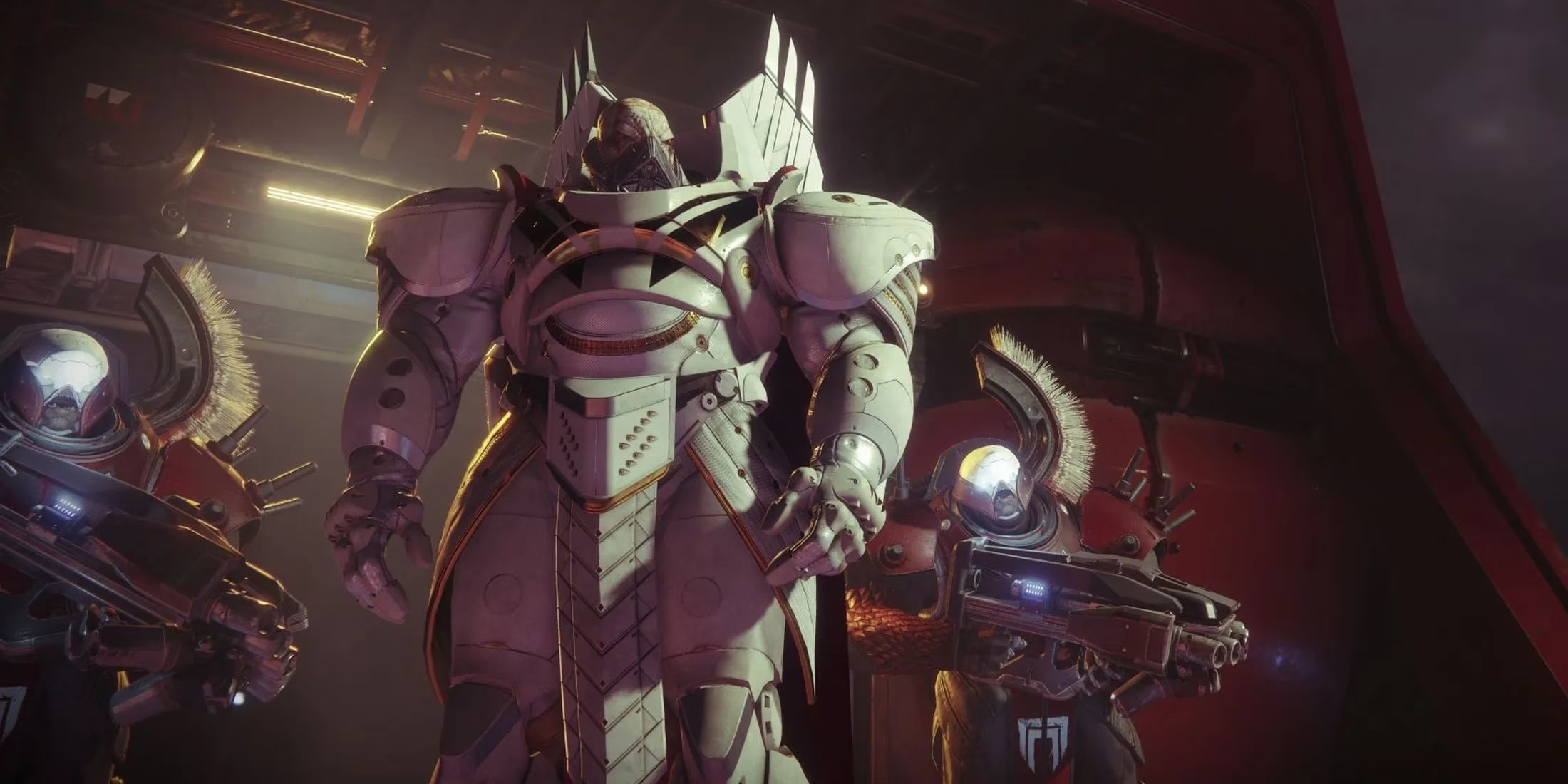
In Destiny 2, every player knows the Red Legion as the big bads—a ruthless faction of the militaristic Cabal led by the imposing Dominus Ghaul, whose singular obsession is to capture the mysterious, planet-sized entity known as the Traveler that hovers above humanity's Last City. Now, check this out: in Martineau's story, the primary antagonist is also called... you guessed it, the Red Legion. This alien army is led by a warlord named Overlord Yinnerah, whose grand ambition is to conquer Earth and seize control of a massive floating habitat in low orbit called Tononob Station. The parallels are, frankly, mind-blowing. It's like Bungie looked at the homework and said, "I'll have what she's having."
Beyond the Legion: A Litany of Likenesses 📜
But wait, there's more! The lawsuit doesn't stop at the name of the villainous faction. Oh no, it goes deep, alleging a whole roster of resemblances that would make any copyright lawyer raise an eyebrow:
| Element | In Martineau's Story | In Destiny 2's Red War |
|---|---|---|
| Primary Antagonist | Overlord Yinnerah | Dominus Ghaul |
| Core Motivation | Conquer Earth, seize floating station | Conquer Last City, capture the Traveler |
| Key Faction | The Red Legion (alien army) | The Red Legion (Cabal faction) |
| Notable Enemies | N/A | Cabal wielding flamers, War Beasts |
| Support Character | N/A | The AI Failsafe |
| Late-Game Lore | N/A | Revelations about the Exo race |
The complaint suggests the similarities extend to the backstories and motivations of Yinnerah and Ghaul—both are powerful, driven leaders of an expansionist military force. It even points to specific enemy types like flamer-wielding troops and War Beasts, and brings up the quirky AI character Failsafe. The implication is clear: this wasn't a case of parallel thinking; this was, allegedly, a straight-up copy-paste job with a sci-fi skin.
The Stakes: What's on the Line for Bungie? ⚖️
Let's talk about what Martineau is seeking, because it's serious business. She's not just asking for a polite apology and a check. The lawsuit demands:
-
Substantial Monetary Damages: Compensation for the alleged unauthorized use of her intellectual property.
-
Injunctive Relief: This is the real kicker. This legal remedy could, theoretically, force Bungie to remove the infringing content from Destiny 2.
Think about that for a second. We're talking about the base campaign that defined Destiny 2 for its first three years. Although the Red War content was "sunset" and vaulted in 2020 (a move that was controversial in its own right, hello Destiny Content Vault drama!), its legacy and lore are woven into the very fabric of the game's universe. Furthermore, an injunction could potentially limit Bungie's future narrative plans if they tread on similar ground. For a game that's all about evolving stories and seasons, that's a potential nightmare scenario.
Bungie's Silence and the Community's Reaction 🤐
As of now, Bungie has been radio silent. No official statement, no blog post, no tweet from the community managers. The silence is deafening. Meanwhile, the Destiny community is having an absolute field day. Forums and social media are blowing up with reactions:
-
The Skeptics: "This feels like a reach. 'Red Legion' is a pretty generic name for a militant group."
-
The Conspiracy Theorists: "I always thought the Red War plot was kinda weak... maybe this is why!"
-
The Legal Eagles: "This will hinge on the 'substantial similarity' test and whether the ideas are protected expression or just unprotectable concepts."
-
The Meme Lords: Already creating images of Dominus Ghaul getting served legal papers.
It's a classic case of life imitating art—or in this instance, one artist's work allegedly imitating another's. The timing is also incredibly ironic, coming just as Bungie was celebrating the 10th anniversary of the Destiny franchise, a true institution in the live-service gaming world.
The Bigger Picture: Inspiration vs. Infringement in Gaming 🌌
This lawsuit touches on a massive, ongoing debate in creative industries: where is the line between being inspired by existing works and outright stealing them? Video game narratives, especially in sprawling sci-fi universes, often build upon well-established tropes—alien invasions, chosen ones, ancient mysteries. But when do specific names, character arcs, and plot structures cross from homage into infringement?
For Martineau, the answer seems clear. Her story, published online years before Destiny 2's development would have been finalized, sits as prior art. For Bungie, the defense will likely argue that these are standard sci-fi elements and any similarities are coincidental. They might point to the myriad other differences: the Light and Darkness, the Guardians, the entire gameplay loop. But with the central antagonist faction sharing an identical name and a strikingly similar goal, this is shaping up to be one heck of a legal battle.
In the end, whether this lawsuit has merit will be for the courts to decide. But one thing's for sure: the saga of Destiny 2 has just gained a new, unexpected chapter—one not written by Bungie's narrative team, but by a federal docket. The Guardian's next mission might just be to find a really good lawyer. Stay tuned, because this drama is more gripping than any Raid boss encounter.