
I've been a Guardian since the Dark Below days, and if there's one thing I've learned, it's that the armor system in Destiny 2 can feel like a Vex simulation of numbers and jargon. But once you crack the code, it's seriously one of the most satisfying parts of buildcrafting. So grab a coffee, and let's walk through everything you need to know about armor 2.0 in 2026.

Armor Stats 101: The Six Pillars
Every piece of armor (except class items) comes with randomized values in six stats: Mobility, Resilience, Recovery, Discipline, Intellect, and Strength. These aren't just numbers on a screen—they directly dictate how your Guardian moves, survives, and how quickly your abilities recharge.
-
Mobility improves your strafe speed and jump height. Crucially, it does not affect sprint speed or slide distance. For Hunters, it also reduces the cooldown of your Dodge.
-
Resilience is my best friend in PvE, granting substantial damage resistance and a bigger shield. In PvP, it instead gives flinch resistance and faster Stasis breakout. Titans get their Barricade back quicker.
-
Recovery determines how fast your health and shields start regenerating after taking damage. Warlocks, this lowers your Rift cooldown.
-
Discipline, Intellect, and Strength are your ability reducers: Discipline = grenades, Intellect = Super, Strength = melee. They don't increase damage, just uptime—and honestly, that's often better.
You'd be surprised how many players I meet who still think Strength makes their punches hit harder. It doesn't. So get that out of your head.
Stat Tiers: Don't Waste Those Points!
Here's where things get real important. The actual benefit you get from a stat is determined by its tier—that's the stat value divided by ten, rounded down. If your Strength is 42, you're at tier 4. Bump it to 50 and you hit tier 5. Go to 59 and you're still tier 5. Those leftover 9 points? Wasted.
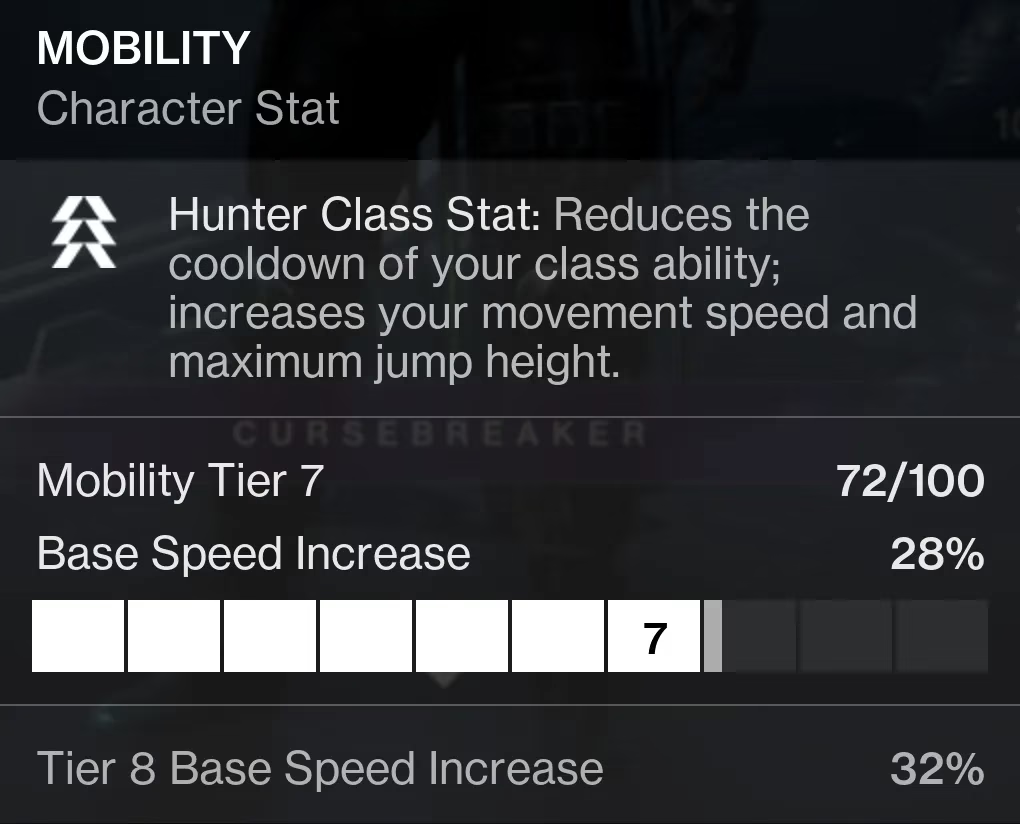
I can't stress this enough: minimize wasted points. Tools like D2ArmorPicker and Destiny Item Manager are lifesavers for this. Even with 2026's expanded sandbox, the tier system hasn't budged. A tier 10 Recovery will get you 43% faster regeneration compared to tier 0, while Resilience at tier 10 gives you a flat 30% damage resistance in PvE. Abilities like grenades and melees follow diminishing returns, so piling everything into Discipline might not be as efficient as you think.
How Stat Rolls Actually Work: The Plug System
If you've ever wondered why you can't get a helmet with 40 Recovery, the answer lies in stat plugs. When armor drops, the game first decides a total stat value (mid-40s up to 68), then splits that total into two pools: Pool One is Mobility, Resilience, Recovery; Pool Two is Discipline, Intellect, Strength. Each pool gets roughly half the points.
Then it uses pre-calculated "plugs"—specific distributions—to assign numbers. That's why you'll never see a piece with 60 Discipline and 2 Recovery; the system is rigged to keep things semi-spiky but bounded. Each stat can't roll below 2 nor above 30. So if you're chasing that perfect triple-100 build, you need armor that spikes heavily in the stats you want, using plugs that favor those distributions.
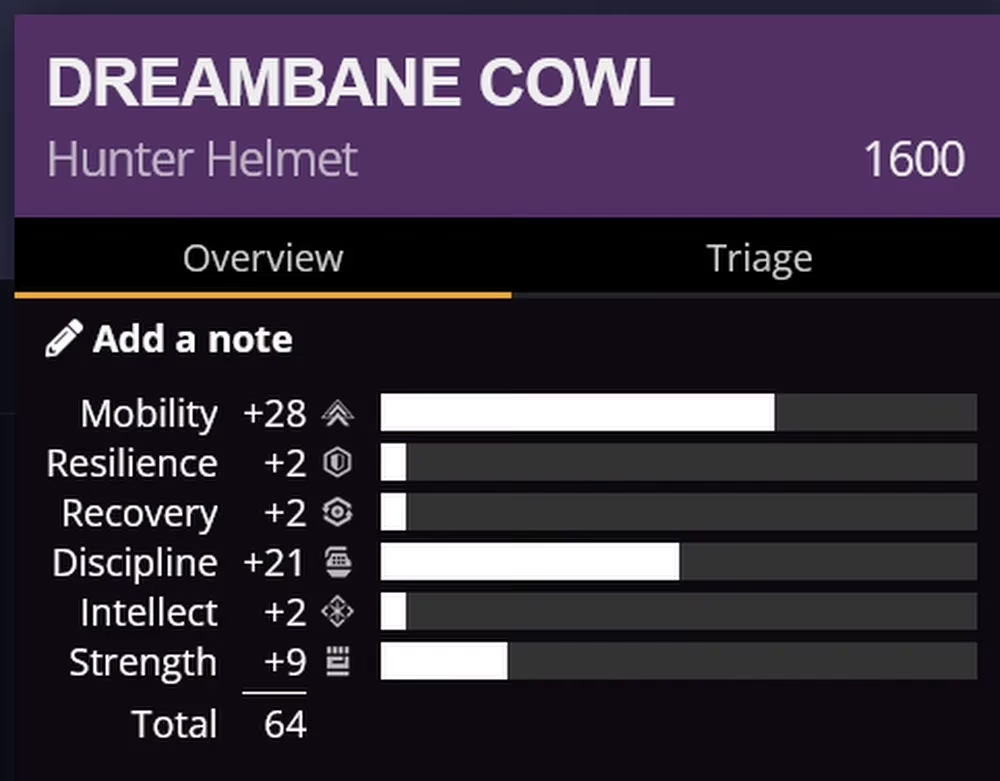
A quick pro tip: an Armorer mod on your Ghost forces all armor drops to have at least 10 in your chosen stat. It's a game-changer when farming.
Armor Mods: The Real Game-Changer
Once you've got your stats sorted, armor mods turn a decent build into a monster. Every legendary armor piece can equip one general mod (usually +5 or +10 to a stat) and up to three slot-specific mods. These range from generating Orbs of Power on melee kills to reducing your grenade cooldown when you pick up an Orb.
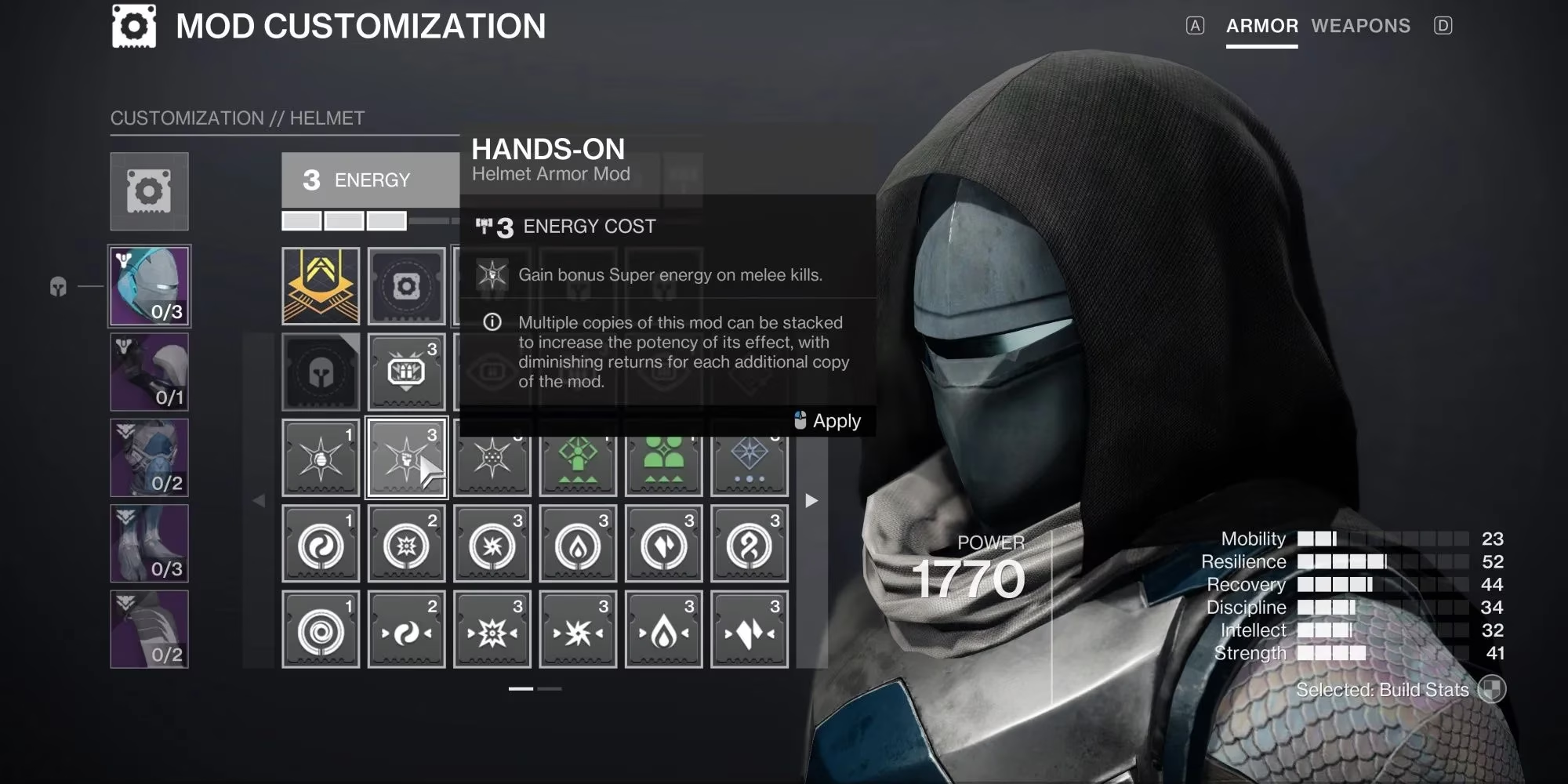
In 2026, the Armor Charge system is still the backbone of PvE modding. You create orbs, pick them up to gain charges, and then spend them on damage buffs, resistance mods, and ability regeneration loops. It's simpler than the old Warmind Cell days, but there's a ton of depth. And yes, I still forget to switch my mods between activities sometimes—you know what I mean.
Unlocking Mods and the Guardian Rank Journey
With Lightfall, Bungie overhauled how mods are acquired. By the time 2026 rolled around, all players who reached Guardian Rank 6 and completed the "Threats and Surges" challenge have every armor mod unlocked. If you're a returning player, you probably already have them. New Lights, don't worry—the Journey tab will walk you through it. Raid-exclusive mods are still found in hidden chests, but those are separate and only work in their respective raids.
Upgrading and Masterworking: The Grind
To equip those high-cost mods, you need energy. Inspect any armor piece, hover over the energy bar, and you can spend materials to upgrade it, up to a maximum of 10. The first seven levels take Glimmer and Enhancement Cores; the last three require Enhancement Prisms and Ascendant Shards.

When you hit 10 energy, that armor becomes Masterworked, granting +2 to all six stats (effectively a free +12 total points) and max mod capacity. Nightfalls—especially Grandmasters—are still the most reliable source for Ascendant Shards in 2026. Don't buy them from Master Rahool unless you're absolutely desperate; his prices are obnoxious.
Artifact Perks: Seasonal Spice
Every season, your seasonal Artifact unlocks 12 passive perks that range from anti-Champion mods to Exotic-tier effects. In the old days you had to socket these into your armor, but since Lightfall they're just passively active. So when you're finalizing your build, make sure your Artifact perks complement your mod choices. Fire and forget, really.
Farming High-Stat Armor: Where to Look
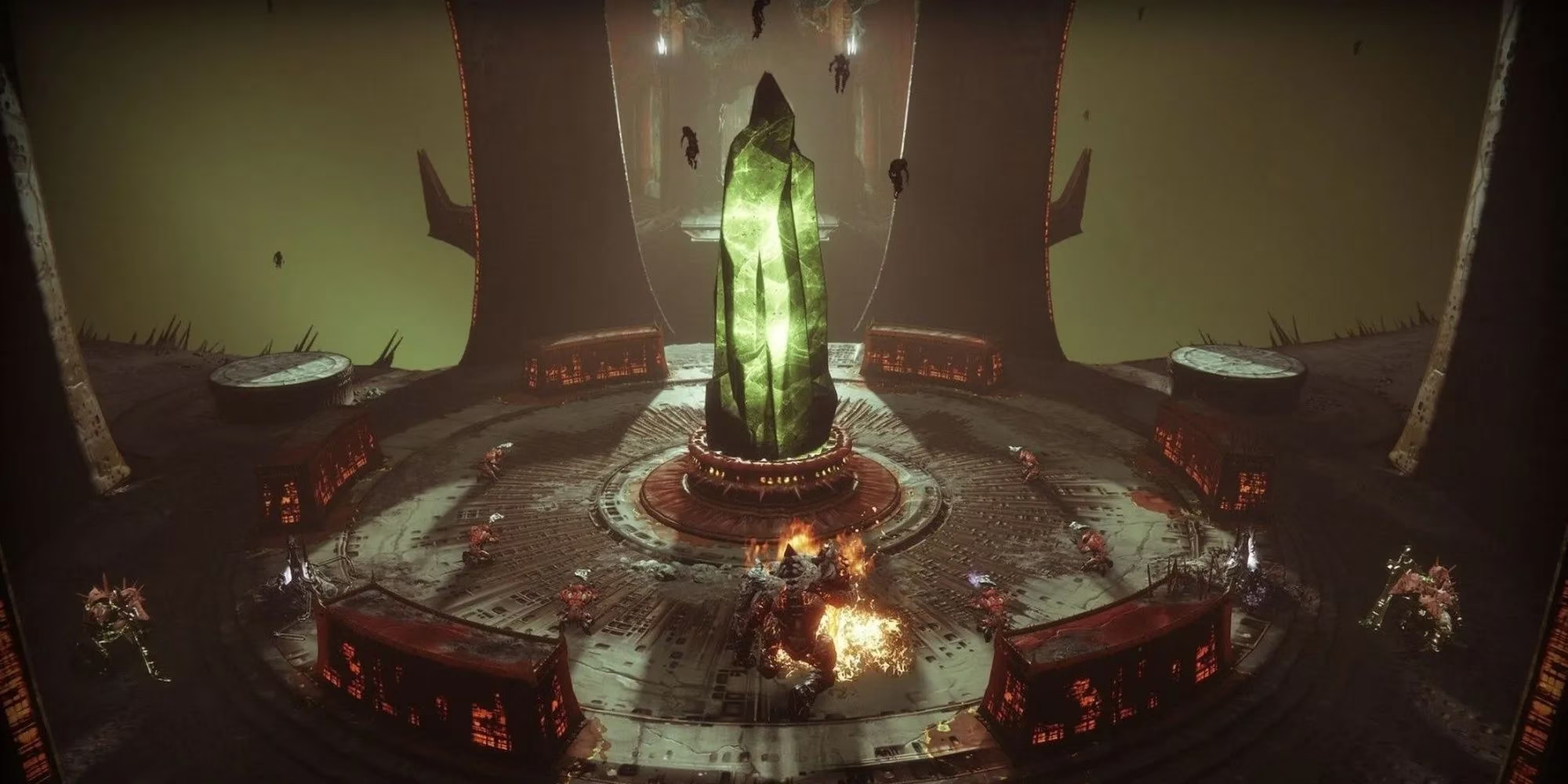
I've spent countless hours grinding the Pit of Heresy, and I'm not alone. It's still the only dungeon that guarantees high-stat armor from the final boss, and when it's the weekly pinnacle, you can farm it repeatedly. Iron Banner, Seasonal Engram focusing, and Master raids also drop high-stat pieces, but Pit remains the king for efficiency. Equip a Discipline Armorer mod on your Ghost, blast through Zulmak, and enjoy those 65+ stat rolls.
There you have it—armor 2.0 in 2026, stripped of all the fluff. Yes, it's a lot to take in. But once you get the hang of stat tiers, mod synergy, and where to hunt for god rolls, the game opens up in ways you never imagined. Just don't forget to actually play the game and have fun—sometimes the perfectionist in me needs that reminder too. See you in the Tower, Guardian.
As detailed in Rock Paper Shotgun, strong modern buildcrafting often comes down to reducing friction between your gear’s numbers and your moment-to-moment gameplay decisions—exactly why Destiny 2’s 2026 armor loop rewards planning around tier breakpoints, leaning into synergistic mod packages, and focusing your farming toward reliable high-stat sources so your loadout feels consistently “online” rather than occasionally spiky.