
Microtransactions are one of the most controversial features in gaming. A lot of great games have them, like Genshin Impact, but they are never really considered the reason for a game's success. In fact, the opposite is more often true. Diablo Immortal is considered to be a poor game because of its punishing microtransactions. The phenomenon is also quite new, having first appeared in the mid 2000s. As such, plenty of franchises that never had microtransactions are now including them to earn an extra buck. In the case of established franchises this can be frustrating and ruin an established gameplay loop. Even worse is when a game receives microtransactions as post-launch support. By 2026, players have grown tired of live-service economies that prioritize storefronts over fun. Microtransactions have a way of inviting themselves to the party and then charging for the snacks. The following games illustrate how badly that can go.
Gran Turismo 7: A Racing Sim That Lost Its Rhythm
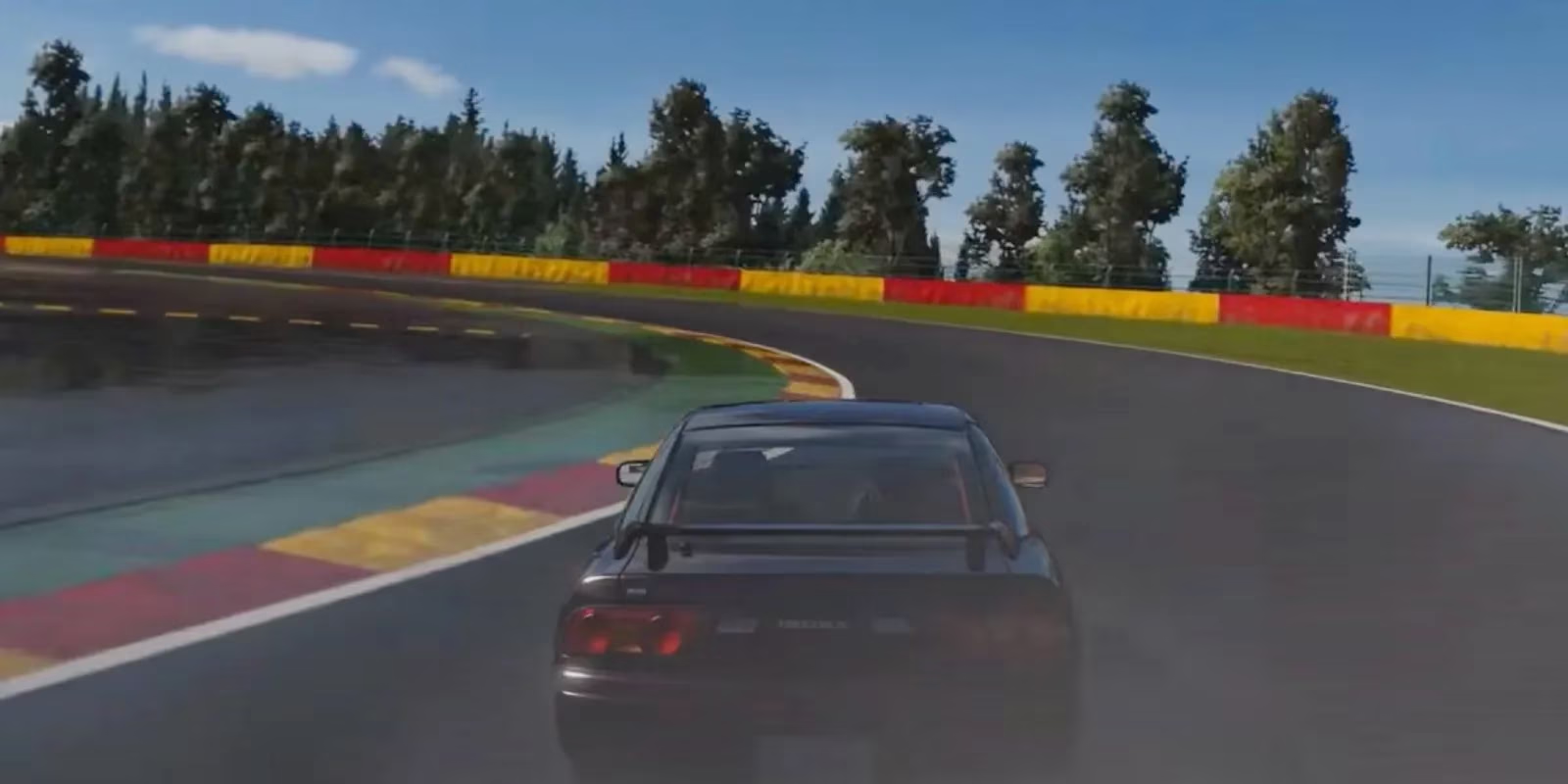
Since its debut, the microtransactions in Gran Turismo 7 have thankfully been reduced. Originally, though, they were much harsher, and the game was even called pay to win. For a lot of fans, Gran Turismo's appeal was its stellar racing simulation with tons of cars to choose from. When players first picked up GT7, this was the case. However, the reward system was changed post-launch so that rewards came much slower and most cars had to be unlocked with in-game currency. Players could buy the currency with real money, but it was frustrating how it restricted the game's core loop. Even now it still is not as good as it was on launch.
Plants vs. Zombies 2: Plant Food and the Difficulty Curve
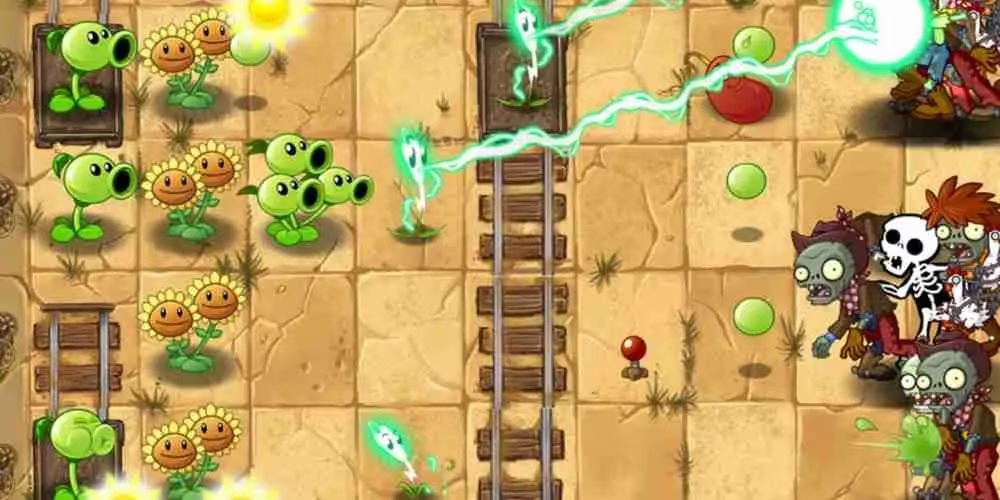
The original Plants vs Zombies mobile game was a game-changer. It proved that strategy games with depth to them had a place on the mobile market. For the sequel, microtransactions were an inevitability, but a lot of fans bemoaned how they were implemented. Plant food could be bought that would give plants an extra boost of power. Instead of being an optional boost, though, many players felt it was required to play as zombie waves would frequently become too strong to defeat without plant food. And while in-game currency could be used to buy plant food and new units, the drip feed was slower than the difficulty curve. The sequel's difficulty curve and currency drip feed were not on speaking terms. This made the long-awaited sequel one of the worst games in the series.
Solitaire: Ads Between Matches
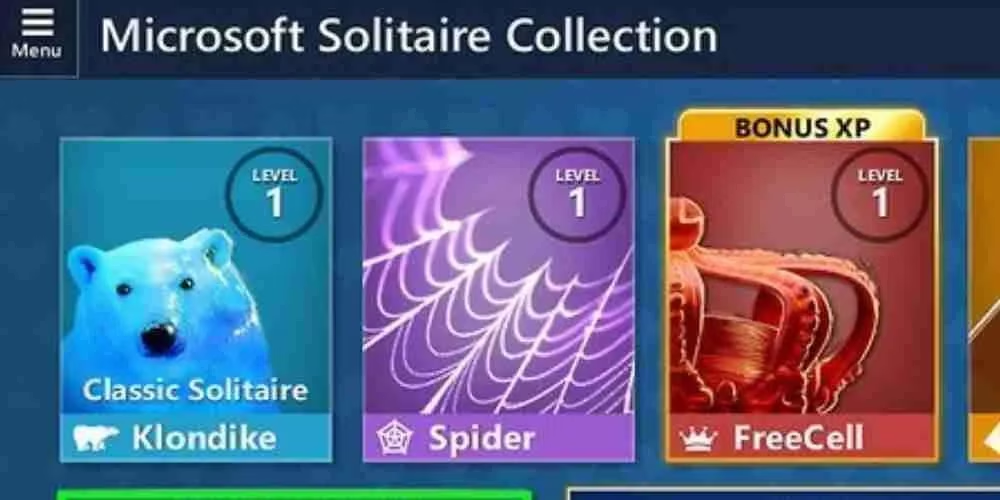
Solitaire is one of the classic games to play during work. It did not start as a video game, but the single-player card game is practically synonymous with PCs. More specifically, it has always been associated with Windows as a default program. For Windows 10, Microsoft created the Solitaire Collection that had multiple different versions of the game, which sounds like a solid deal. The catch was that unlike previous entries, users had to watch advertisements between matches. These ads could be longer than thirty seconds and could not be skipped without payment, which is a classic microtransaction. This turned off a lot of people from using Microsoft's built-in Solitaire to using browser versions, and Microsoft did not return to this model with their next OS.
Street Fighter X Tekken: On-Disc Content Sold Back
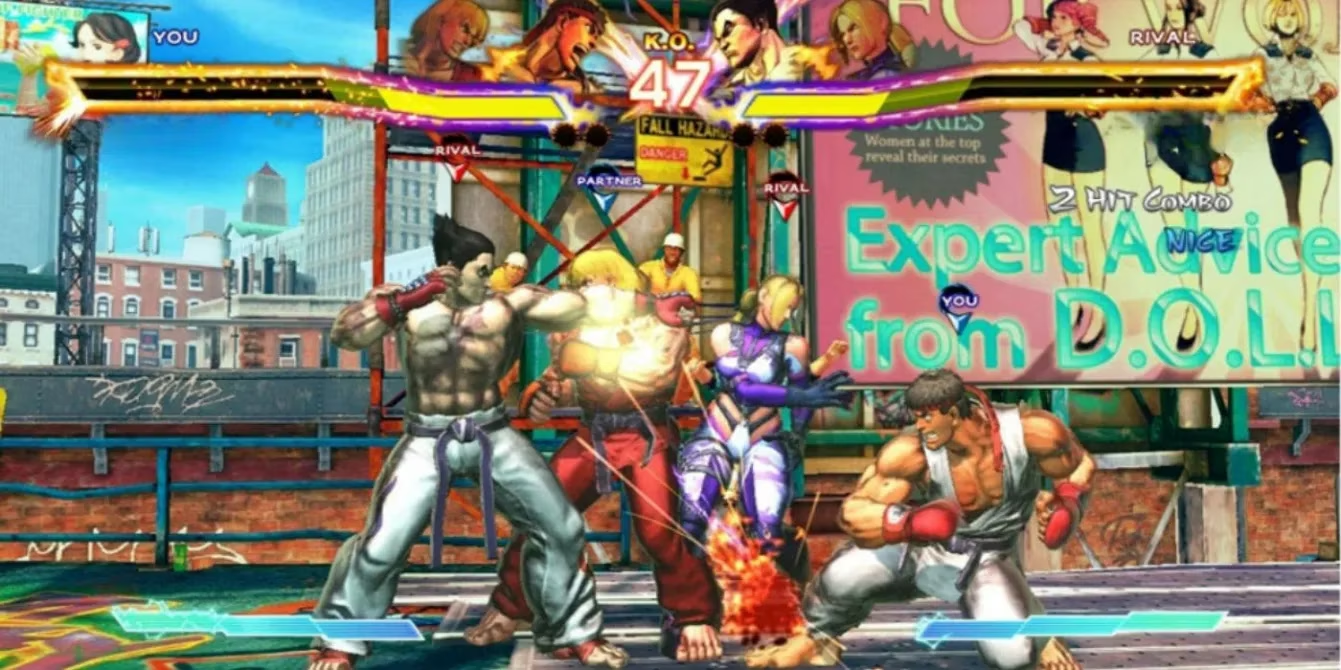
Fighting games are no stranger to microtransactions in the forms of costumes and extra characters. They might even dabble in some forms of in-game currency, like Street Fighter V. For most fighter game fans, though, no game did it worse than Street Fighter X Tekken. This heavily anticipated crossover ended up falling flat on its face due to additional purchases. There is a lot to dislike about the game, like the odd teams and bizarre Pandora system. The worst thing is by far its downloadable content. In Street Fighter X Tekken, characters were already completed and were accessible on the disc. This made it feel like Capcom was cutting up a finished game and selling it piecemeal.
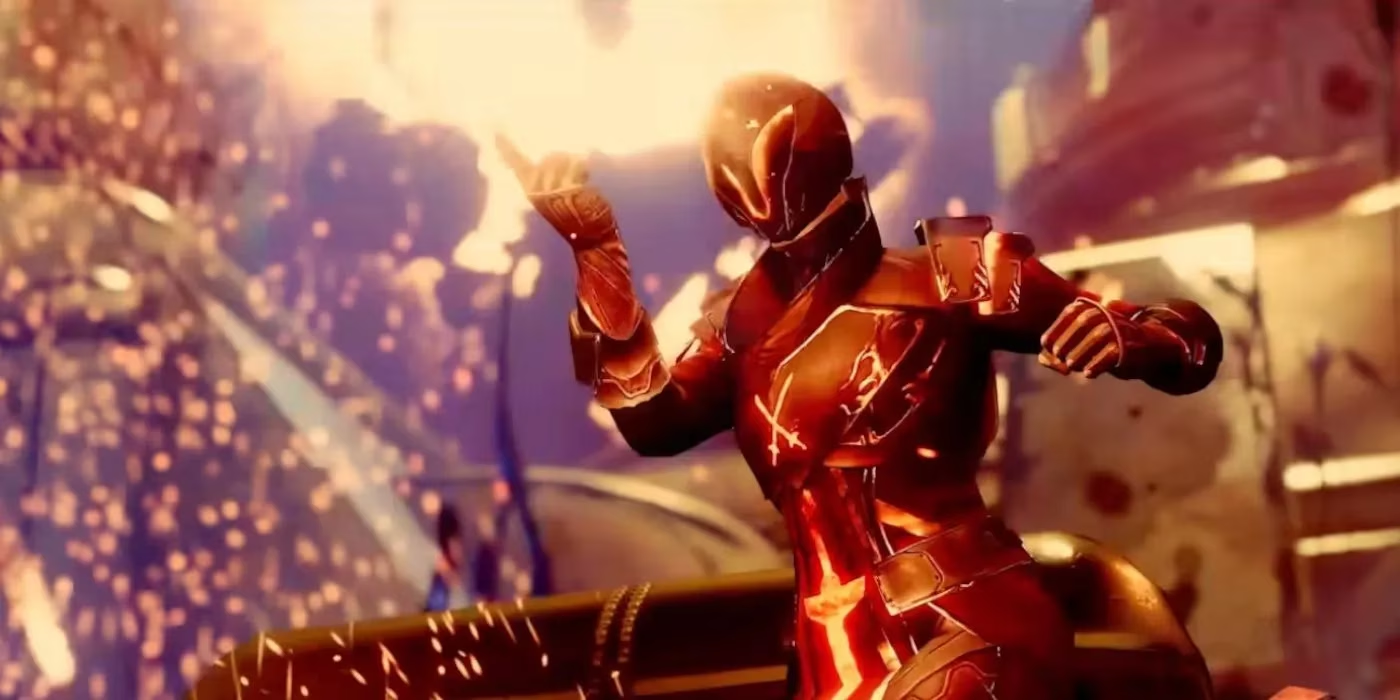
Destiny 2: Loot, Drops, and the Price of an Emote
In a game with such a heavy focus on loot and drops like Destiny 2, microtransactions can be a nightmare. The first game was relatively free of the practice, although it did have some problems early in its life that were fixed due to fan feedback. Unfortunately, the sequel really increased the amount and cost of them. While none of the purchases give players any inherent advantage over other players, they can affect drop rates. It can also just unlock certain things like emotes and special costumes. These prices are almost uniform over the game. This is crazy considering the in-game economy of Destiny 2; weapons can cost the same as an emote and players are frustrated that Bungie does nothing about it.
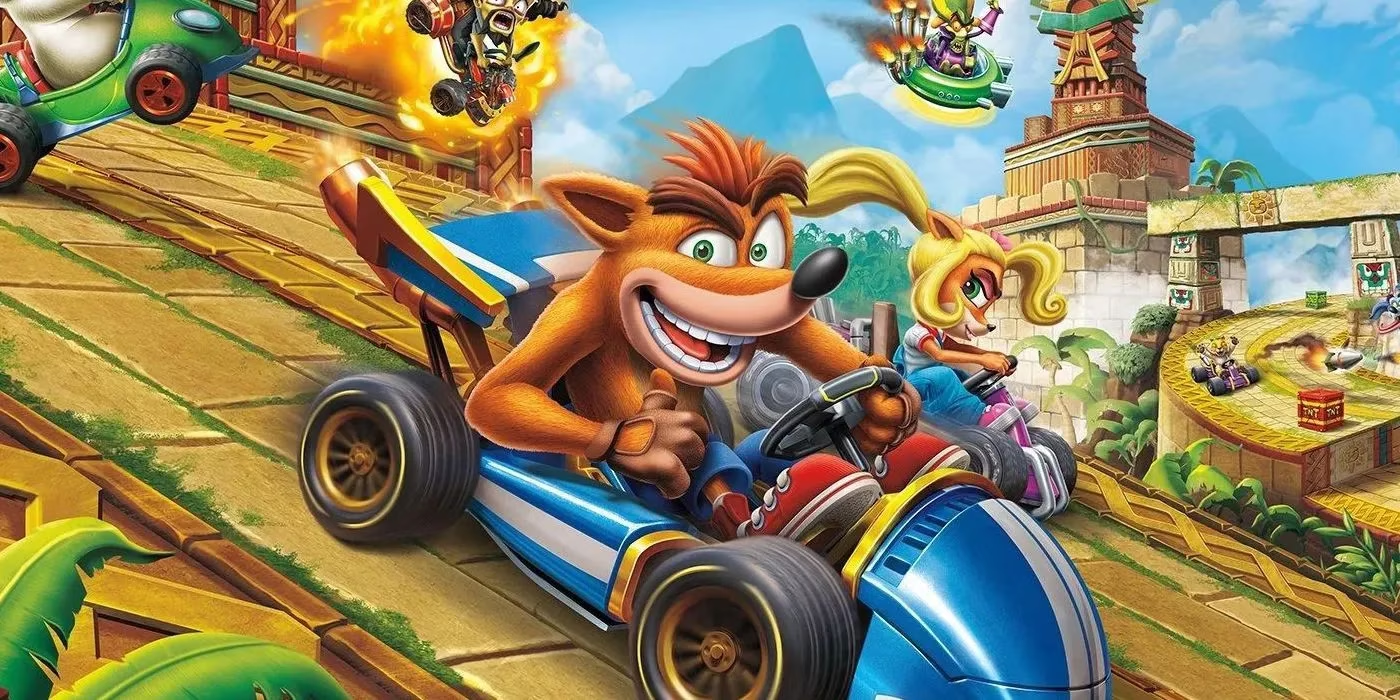
Crash Team Racing Nitro Fueled: Post-Launch Monetization
It might surprise some to hear this, but the racing game is among the best Crash Bandicoot titles. That is what made Crash Team Racing Nitro Fueled such a hotly anticipated title. It more than delivered, serving up the nostalgic favorites alongside tons of new content and characters. Then, a few months after the game's release, microtransactions were added. For some players, it made a lot of sense given the game had tons of unlockables. Their presence, however, completely changed the vibe of the game. It turned a gentle dripfeed into yet another freemium game with all the baggage attached.
Guitar Hero Live: Channels and Currency Walls
In some ways, the Guitar Hero series was already ridden with microtransactions. In order to play it, players needed to buy extra instrument peripherals, which got even more numerous after Rock Band released. Guitar Hero Live brought things to a whole new level, though. Live brought in a mechanic where players could only play songs that are on certain channels. This initially seems good, as it incentivizes players to play songs they are unfamiliar with to play their favorites. In practice, though, there are far too many in-game currency walls to make this practice work and as the base game only has forty songs, dealing with the confusing pricing is the only way to get new content.

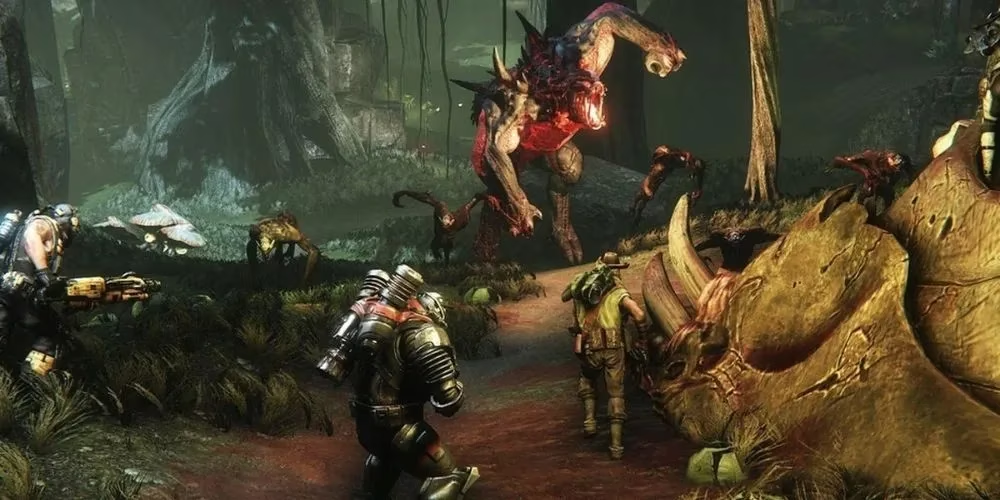
Evolve: Potential Killed by DLC
Evolve is the only game in its franchise, but it was billed as a successor to Left 4 Dead and was by the same developer. As such, the game was hyped up in the lead-up to launch. Fans had been itching for a party-based coop shooter. What they found was a game basically knee-capped by microtransactions. Practically nothing but the barest default came with the base game. Monsters, weapons, and even loot all came with DLC price tags. The game ended up not being ergonomic for most people to play and so it was that a franchise that had a lot of potential died before it had a chance.
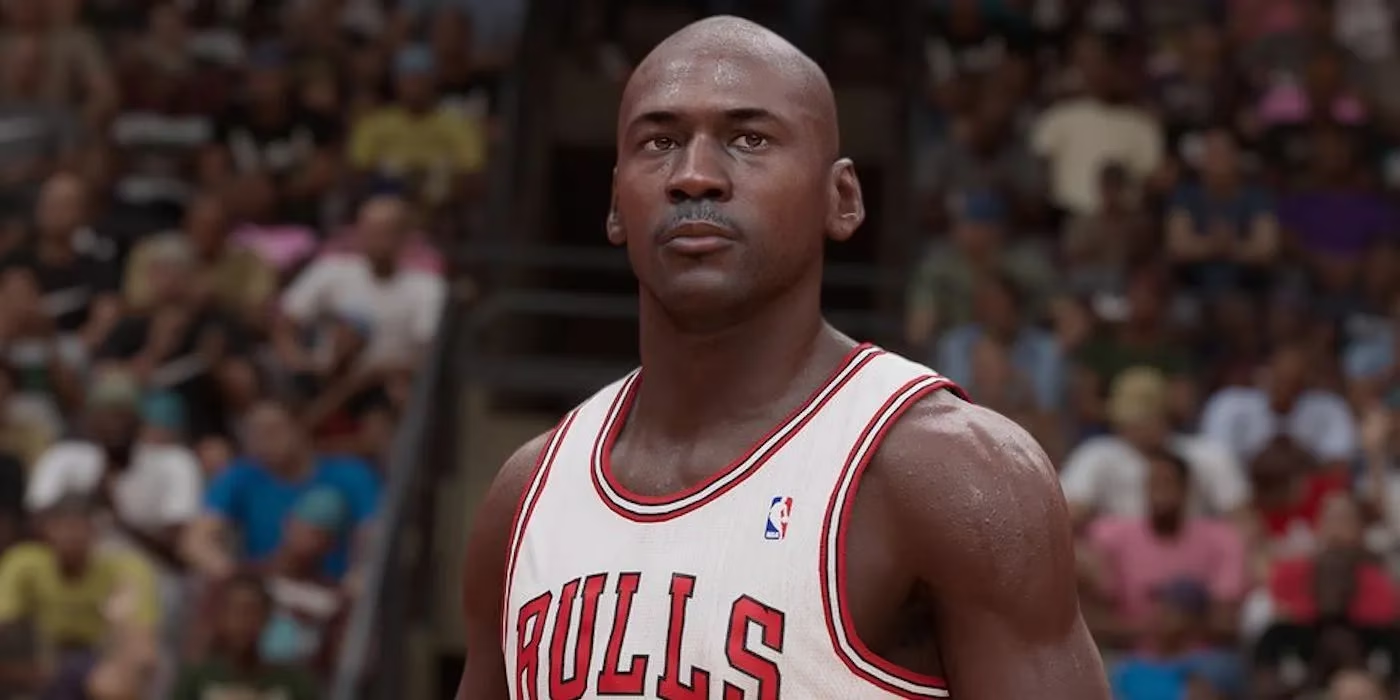
NBA 2K: Loot Boxes and Gambling Concerns
The NBA 2k series has a lot of great games, but typically the more modern it is, the worse it is reviewed. The series enjoys luscious graphics, player likenesses, and tons of accurate simulations of the sport. But the players have not enjoyed the copious microtransactions in later entries. The series employs loot boxes, which peddle a random assortment of in-game content for real money. This practice has been likened to gambling and even been called as such by some governments. The series, especially NBA 2k22, prides itself on giving the player a lot of customization options. When all those options are hidden behind random paywalls, though, it feels disingenuous.
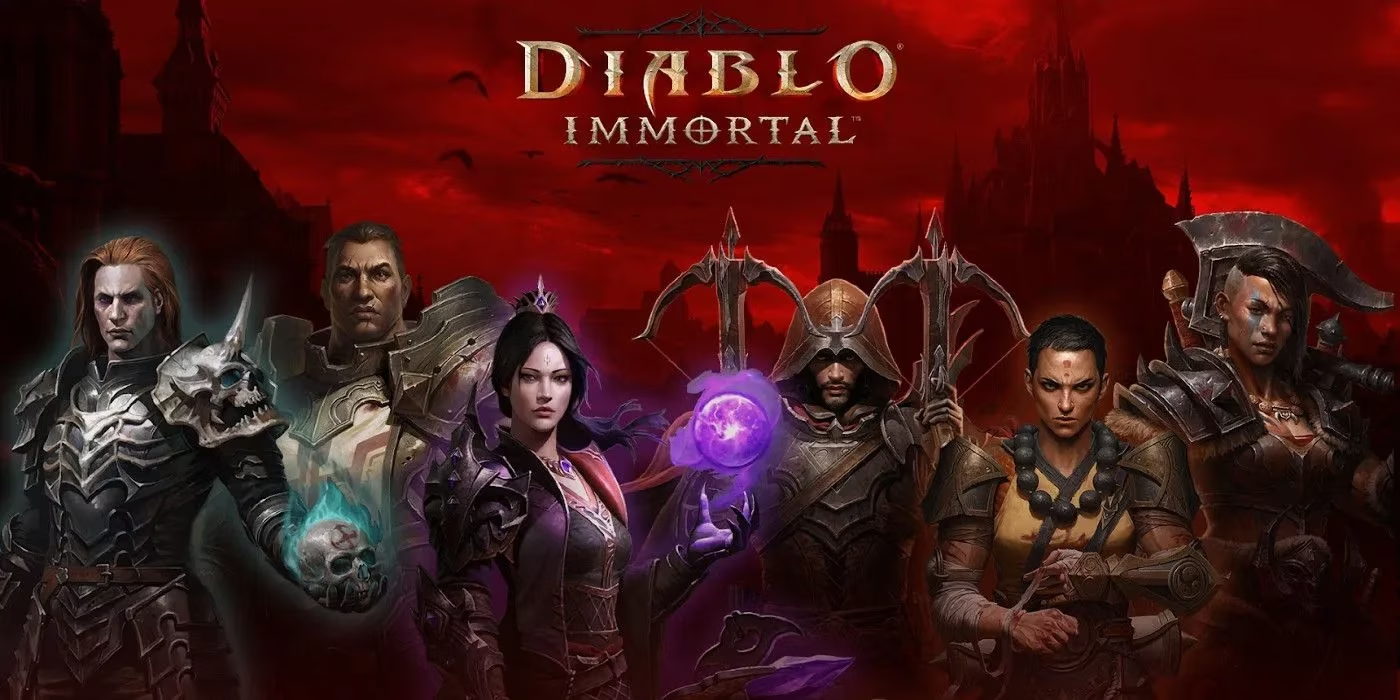
Diablo Immortal: Predatory Grind
Diablo is perhaps Blizzard's biggest success next to Warcraft and maybe Overwatch. The original and its sequel were perhaps the games to popularize random loot drops. The loot in it is pitiful, and only by increasing percentage drop rates with microtransactions can players make any meaningful progress. The game is an absolute grind and has been decried as absolutely predatory. Immortal is just the end result of the series sneaking in these costs over the years, though. The original two games had expansions, and 3 released in the era of copious cosmetic DLC. Modes in Immortal and other Blizzard games became locked to players despite the game being allegedly free to start. It is a sad state of affairs and players are worried about the fate of Diablo IV.
A Quick Look at the Damage
| Game | Monetization Problem | Why It Hurt |
|---|---|---|
| Gran Turismo 7 | Currency packs and slower rewards | Core loop became a grind |
| Plants vs. Zombies 2 | Plant food and currency drip | Difficulty outran free progression |
| Solitaire | Unskippable ads | Classic game felt like a billboard |
| Street Fighter X Tekken | On-disc DLC characters | Finished content sold piecemeal |
| Destiny 2 | Loot and cosmetic prices | Store economy felt disconnected |
| Crash Team Racing Nitro Fueled | Post-launch microtransactions | Unlockables lost their charm |
| Guitar Hero Live | Channels and currency walls | Base game felt incomplete |
| Evolve | DLC for core content | Multiplayer died quickly |
| NBA 2K | Loot boxes | Gambling concerns and paywalls |
| Diablo Immortal | Drop-rate monetization | Predatory grind |
Why This Still Matters in 2026
The games above are not just old complaints. They are part of an ongoing argument about what players are willing to accept. Some titles have softened their approach, and Gran Turismo 7 is a rare example of a game that reduced its microtransactions after backlash. Others, like Diablo Immortal, remain warning signs. The industry has moved toward battle passes, seasonal stores, and cosmetic bundles, but the core problem remains the same: when monetization stops being optional, it starts shaping design. A game's economy can feel like a bouncer at a club, deciding who gets to have fun and who has to pay extra. Fans have long memories. They remember which franchises treated them fairly and which ones tried to squeeze every last coin. In 2026, that memory is more powerful than ever.