
Sony has spent decades convincing people to buy a plastic box. Now it wants them to buy a streaming subscription, a movie ticket, and possibly a Runebear plushie. The company's transmedia ambitions are no longer a side quest. They are the main campaign. Back in 2022, Hermen Hulst, the PlayStation executive who once ran SIE Worldwide Studios, told Reuters that collaborations on the game development side come first and foremost, but it is also not unthinkable for PlayStation Productions to explore opportunities. Translation: if a game has a fanbase, Sony has a spreadsheet for it.
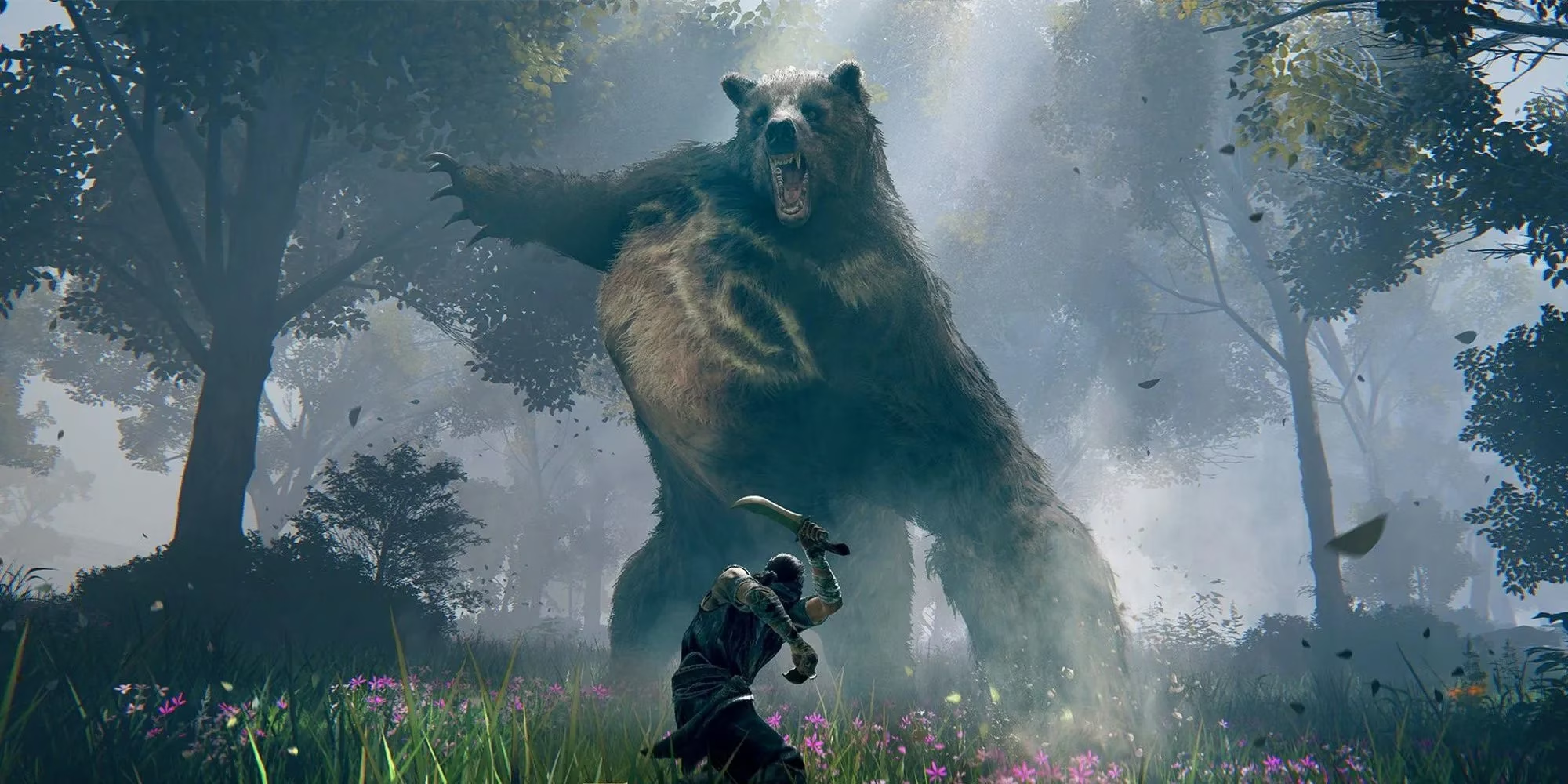
At the time, Sony and Tencent had just acquired a combined 30 percent stake in FromSoftware. That investment looked like a strategic shrug. By 2026, it looks more like Sony buying a ticket to the Lands Between and wondering whether the theater serves popcorn. FromSoftware is the studio behind Elden Ring, Dark Souls, Bloodborne, and Sekiro. It is famous for gorgeous worlds, cryptic lore, and enemies that treat players like a stress ball. A TV show or movie based on any of those properties would be a cultural event, assuming the adaptation does not get parried into oblivion.
🎮 FromSoftware: The Runebear in the Room
FromSoftware is not fully owned by Sony. That is exactly why Hulst's comment mattered. Sony is now comfortable borrowing other studios' toys, not just playing with its own. The company's PlayStation Productions arm has been busy turning first-party hits into film and television, but the door is open for partners. FromSoftware's parent company, Kadokawa, has grown closer to Sony in recent years, and the Elden Ring franchise has only expanded. Shadow of the Erdtree arrived in 2024, Elden Ring Nightreign launched in 2025, and reports have linked A24 and Alex Garland to an Elden Ring film. Whether Sony's PlayStation Productions gets a credit or not, the message is clear: Hollywood has smelled the runes.
📺 The Adaptation Assembly Line
| Project | Platform | Current Vibe |
|---|---|---|
| The Last of Us | HBO/Max | Season 1 stunned skeptics, Season 2 arrived in 2025, and a third season is on the horizon. |
| Twisted Metal | Peacock | Anthony Mackie and Neve Campbell turned vehicular chaos into a hit; Season 2 kept the engines roaring. |
| Gran Turismo | Theaters | David Harbour and Orlando Bloom starred in a 2023 film that proved racing sims can have a plot. |
| Horizon | Netflix | A TV adaptation has been in development, because robot dinosaurs deserve prestige drama. |
| God of War | Amazon Prime Video | The series is marching toward production, with casting news teasing a Norse-sized spectacle. |
| Destiny | Rumored animated show | Bungie's $3.6 billion acquisition opened the door, and hires have fueled speculation. |
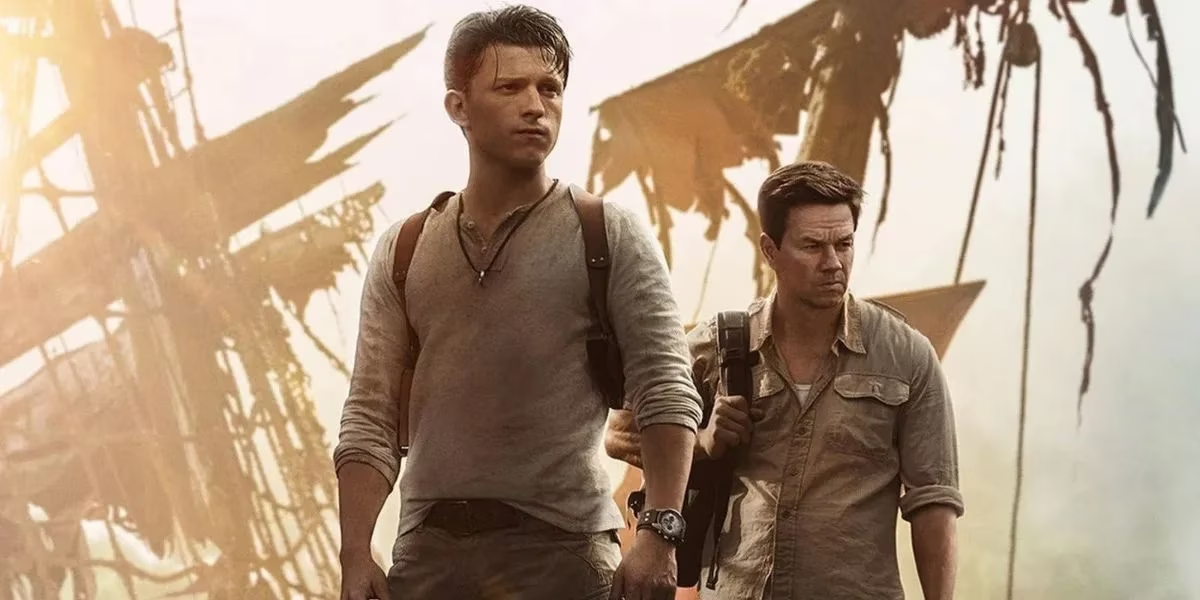
These projects are not random. They are part of a strategy. Uncharted grossed $400 million worldwide and became the fifth highest-grossing video game movie of all time at one point. That number made executives sit up, adjust their ties, and ask why every game in the vault does not have a poster. Sony then bought Bungie for $3.6 billion and said its resources were at the developer's disposal. In corporate speak, that means Destiny's universe is not staying in the console lane. An animated series, a film, a cereal mascot—none of it would be shocking.
🎬 Why This Is Happening Now
Several forces are colliding. Streaming services need recognizable IP. Video game stories have grown more cinematic. Audiences who grew up with controllers now have disposable income and nostalgia. Sony owns a massive catalog and a production studio. The math is less complicated than a Soulsborne boss pattern. If a game can generate a fanbase, it can generate a franchise. If it can generate a franchise, it can generate a theme park ride, a limited-edition controller, and a Twitter debate about casting.
Humorous? Maybe. But Sony is not joking. The company has repeatedly said it wants to expand its IP beyond games. PlayStation Productions has become a bridge between the console war and the box office. That bridge is crowded. The Last of Us proved that fidelity to source material can win over skeptics. Twisted Metal proved that a weird premise can work if the tone is right. Gran Turismo proved that even a racing game can be a movie, though it helped to add humans.
⚠️ The Risks Are Real
Not every adaptation survives the first encounter. A bad video game movie is like a Mimic chest: it looks like treasure, then eats the reputation of everyone involved. Fans are passionate, online, and equipped with lore spreadsheets. They will notice if a character's hair is wrong. They will notice if the plot ignores the source. They will notice if a Runebear is not sufficiently terrifying. Sony knows this. That is why the company has been careful with The Last of Us and why it has hired credible talent for other projects. The goal is not just to make a show. The goal is to make a show that does not get review-bombed into the Abyss.
🚀 What Comes Next in 2026 and Beyond
By 2026, Sony's transmedia experiment has moved from experiment to industry standard. The Last of Us has multiple seasons. God of War is gearing up. Horizon is still in the lab. Destiny may be animated. And FromSoftware remains the glittering prize in the corner. A Bloodborne series? A Dark Souls movie? An Elden Ring adaptation with a budget larger than a dragon's hoard? None of it is confirmed, but none of it is unthinkable either. Hulst's 2022 quote has aged like a fine Estus Flask.
The lesson is simple. Sony no longer sees video games as just games. It sees them as universes with multiple entry points. A player can start with a controller, continue with a TV remote, and finish with a theater ticket. The Runebear may not know it yet, but it is auditioning for a role. If Sony gets its way, the next generation of fans will meet Malenia on a streaming service before they ever die to her in a game. That is either brilliant or terrifying. Probably both.