
As a dedicated player and observer of the gaming landscape, I find myself at the center of a debate that has set the looter shooter community abuzz in 2026. The recent launch of Nexon's free-to-play title, The First Descendant, has been overshadowed by a controversy that feels less like a simple coincidence and more like a case of creative osmosis gone slightly awry. It all began when sharp-eyed journalists and players noticed that the game's user interface contained icons that bore a striking, almost familial resemblance to those found in Bungie's long-standing titan, Destiny 2. The discovery has ignited discussions about inspiration, asset usage, and the fine line developers walk in a genre built on familiar loops.
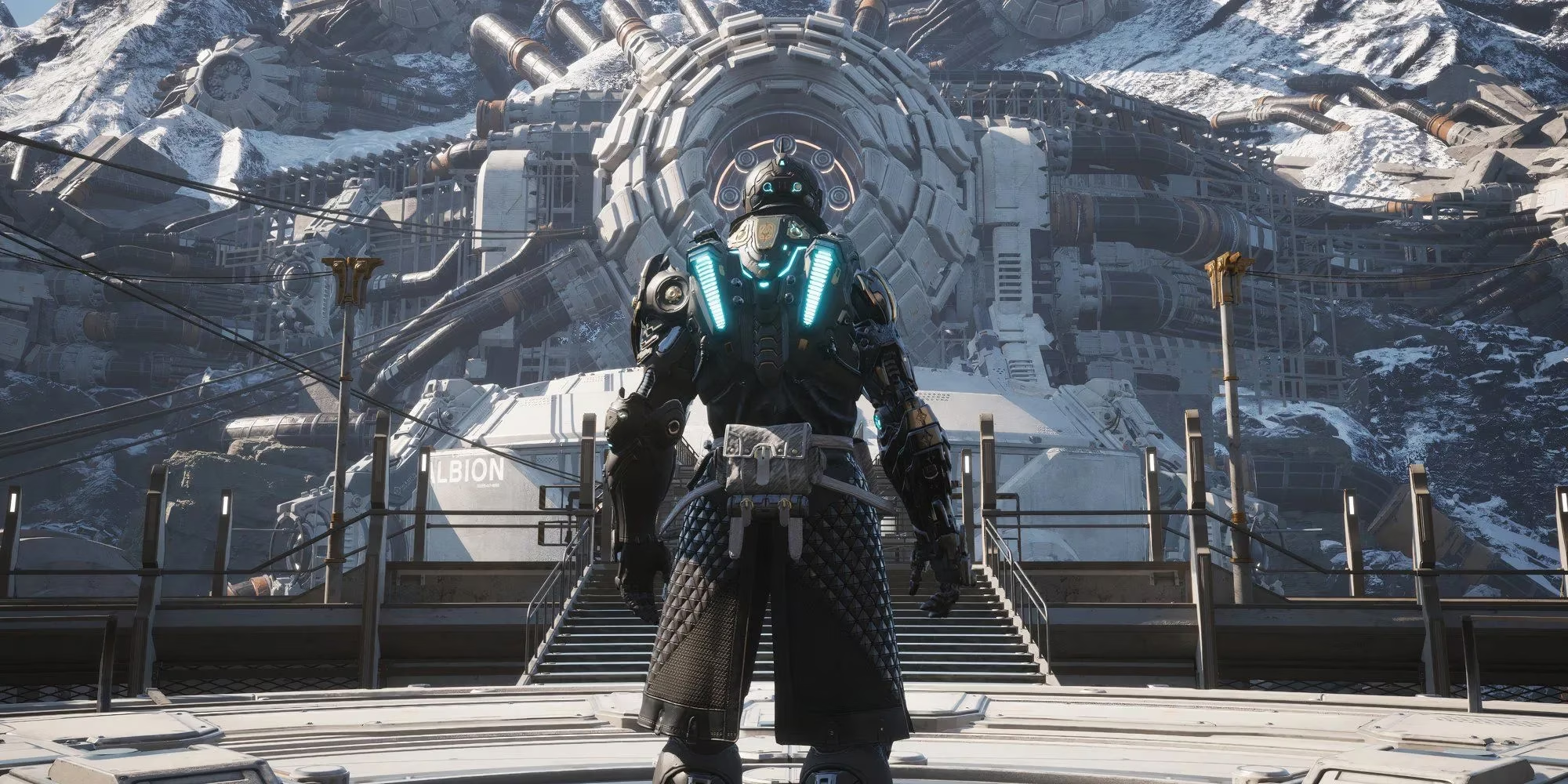
The initial spark was lit by journalist Paul Tassi, who presented side-by-side comparisons that were, in his words, akin to "copying my homework without making it look like you copied it." The visual evidence was compelling. Weapon perk icons, status effect symbols, and inventory markers in The First Descendant appeared as barely altered reflections of their Destiny 2 counterparts. For a community steeped in Bungie's iconography for over a decade, the similarities were as jarring as finding a beloved novel rewritten with only the character names changed. This wasn't just homage; it felt like a direct transplant, a case of one game's visual language being used as a template for another's. The reaction was swift, flooding social media and forums with comparisons that ranged from amused to outright accusatory.
However, the plot thickened upon deeper investigation. It was revealed that the foundational icon assets in question were, in fact, part of a freely available library. Bungie had utilized and modified these base icons to create Destiny 2's distinct set. Legally, Nexon was on solid ground—using the same public resources is not a copyright infringement. Yet, ethically and perceptually, the situation was murkier. Choosing to modify stock icons in a nearly identical manner to an industry-defining competitor felt, to many, like building a skyscraper using the same blueprints as the one next door, then painting it a slightly different color. It raised questions about artistic direction and the pursuit of a unique identity in a crowded market.
Facing the growing chorus of concern, Nexon issued a formal statement. They expressed "deep affection and respect" for other games in the genre, explicitly naming Destiny 2 as a personal inspiration for the team. They acknowledged the feedback and committed to adjusting the imagery "to ensure that [it] clearly reflects the unique identity of our game." This response was a necessary olive branch, an attempt to calm waters that had been churned by the controversy. For players like myself, it was a reminder that game development is often a tapestry woven from threads of influence, but the final pattern must be recognizably your own.
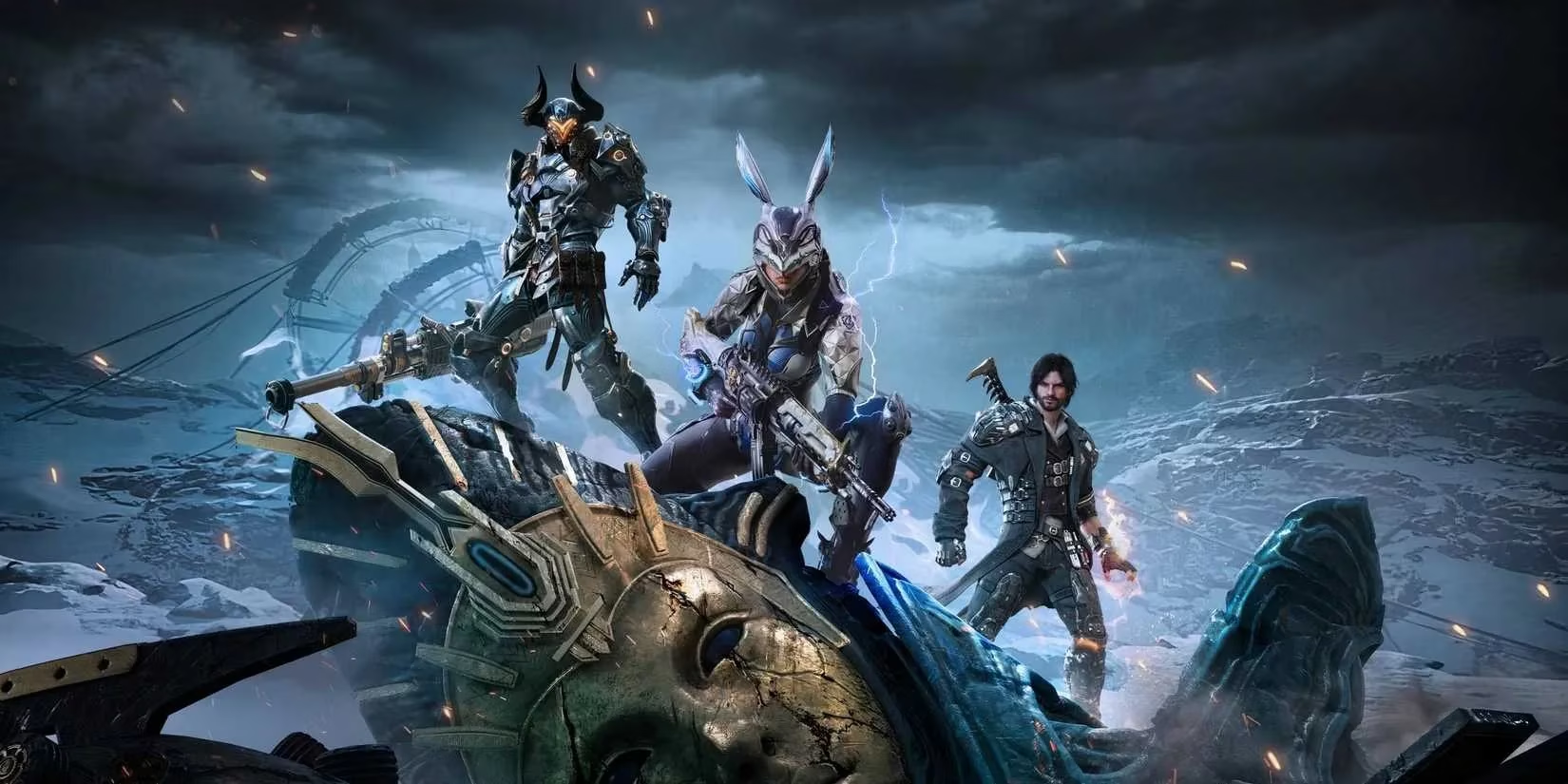
This icon debate unfolded against the backdrop of The First Descendant's challenging launch. Released on June 30th across all major platforms, the game has garnered a "Mixed" reception on Steam. The controversy is just one facet of player dissatisfaction. Key criticisms from the community include:
-
Data Privacy Concerns: Nexon's request to share personal information with third parties has made many players deeply uncomfortable, leading to a significant portion of negative reviews.
-
Gameplay Comparisons: Players have described the experience with metaphors that cut to the core: it's been called "Warframe without the mobility" and "Destiny without the cool skills." These aren't just insults; they're specific critiques about movement fluidity and ability depth that the game currently lacks.
-
Technical Hurdles: Like many live-service launches, the game launched with its share of bugs and performance issues.
In a positive move, Nexon has not been idle. The recent 1.0.2 patch addressed numerous bugs and added highly requested features, demonstrating a commitment to post-launch support. This ongoing development is crucial, as the icon controversy has become a litmus test for Nexon's responsiveness. Will they follow through on their promise to differentiate their visual identity, or will the game remain visually in the shadow of its inspirations?
Looking at the broader genre, this incident highlights a recurring tension. Looter shooters thrive on familiar feedback loops—the chase for loot, the build-crafting, the satisfying combat. Studios inevitably learn from each other. Destiny 2 itself drew from MMO and RPG traditions. The danger lies not in learning, but in replicating the specific language of a predecessor too closely. When a game's interface feels like a dialect of another's, it can break immersion and foster a sense of derivative design. For The First Descendant to carve out its own space, it must evolve beyond these initial comparisons. Its future success depends on cultivating a soul that is entirely its own—something as unique and identifiable as a player's favorite, perfectly rolled weapon. The path forward requires more than just changing icons; it requires a fundamental commitment to an original vision that can stand shoulder-to-shoulder with its inspirators, not just in their stylistic wake.